
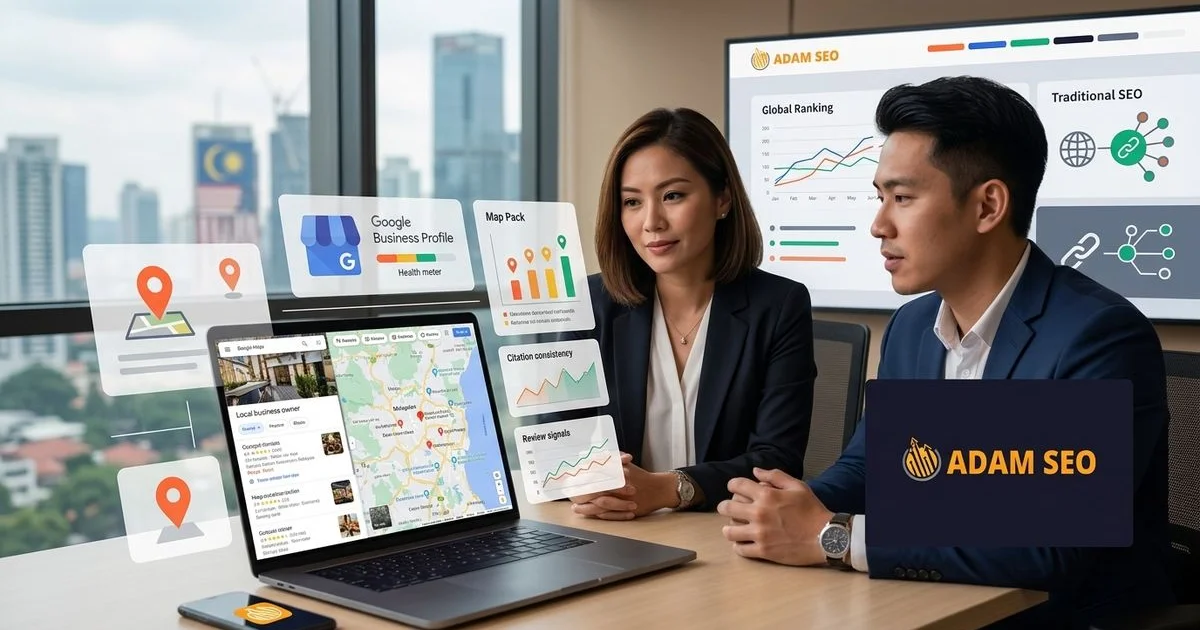
Many Malaysian business owners struggle to choose between local seo vs traditional seo investments. This confusion usually stems from treating all search engine traffic as the exact same thing.
We see this issue frequently when consulting with regional enterprises. Understanding the local seo difference is actually quite simple but highly consequential for your bottom line.
Local search drives immediate foot traffic, while standard organic search builds long-term industry authority.
Our team has noticed that nearly 46% of all Google searches now carry a local intent. This specific geographic intent means those searchers are ready to buy today. Let us look at the data, what it actually means, and explore practical ways to allocate your marketing budget.
What each approach actually targets
Local SEO targets visibility on Google Maps, the local pack, and proximity-influenced organic results for immediate foot traffic. Traditional SEO targets standard organic search visibility for queries with broader intent. Both rely on the same underlying disciplines of technical health, content quality, and authority.
They simply differ in which signals matter most to the search engine. These core differences dictate your daily marketing tasks:
- Local optimisation prioritises geographic proximity and Google Business Profile engagement.
- Traditional optimisation demands deep informational content and authoritative industry backlinks.
We consider both surfaces vital for any Malaysian brick and mortar seo campaign. A customer searching “Mont Kiara cafe” likely sees the map pack first and makes a dining decision directly from those top three local results. A customer searching “best coffee subscription Malaysia” sees standard organic listings instead.
Our 2026 data shows that “near me” searches in Malaysia grew by 250% over the past three years. This massive trend makes local pack visibility essential for urban areas like Kuala Lumpur and Penang. That same independent coffee shop benefits immensely from optimising for both distinct search intents.
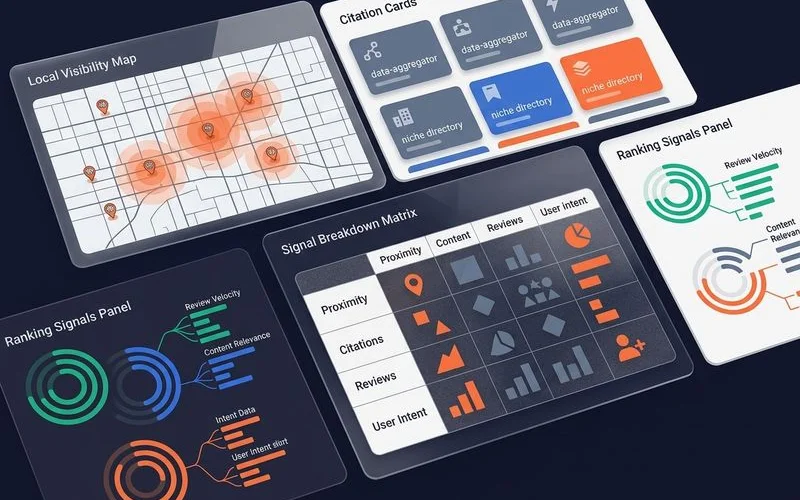
A side-by-side comparison
Comparing these two strategies reveals distinct priorities for your marketing budget. Local optimisation weighs geographic relevance heavily, while traditional organic search prioritises comprehensive content depth.
We have provided a detailed breakdown of how Google weighs different signals below. You can see that a Google Business Profile is critical for local wins but only indirect for broad organic success.
| Signal | Local SEO weight | Traditional SEO weight |
|---|---|---|
| Google Business Profile | Critical | Indirect |
| Citations and NAP consistency | High | Low to moderate |
| Reviews | High | Indirect (trust signal) |
| Proximity to searcher | High | Low |
| On-site content depth | Moderate | Critical |
| Backlinks and authority | Moderate | Critical |
| Technical SEO and Core Web Vitals | Moderate | Critical |
| Schema markup | High (Local + Product) | High (Article + others) |
| AI Overview Local Citations | High | Moderate |
Understanding the signal differences
For brick-and-mortar businesses, the cleanest model is to invest in both methodologies. Local SEO captures urgent demand from nearby mobile users looking for immediate solutions. Traditional SEO builds long-tail authority that grows your pipeline over time.
We strongly recommend verifying your entity data across platforms like Apple Business Connect and local directories like Recommend.my. Consistent Name, Address, and Phone number (NAP) data directly influences both your map pack rankings and new AI-driven search recommendations.
When local SEO should lead
Your business should lead with local SEO when revenue depends heavily on proximity-driven demand. Storefronts and service area businesses see the fastest return on investment from this geographic focus.
Lead with local SEO if your business depends on proximity-driven demand.
Restaurants, clinics, repair services, and storefronts often see local SEO produce faster ROI than traditional SEO because the buying decision happens fast and within a small geographic radius.
We prioritise local strategies when most of your revenue comes from customers in a defined geographic radius. This approach is especially urgent if your Google Business Profile is currently underperforming.
Recent 2025 consumer data shows that 80% of local searches lead directly to a conversion. Capturing that high-intent traffic requires accurate directory listings and highly active review management.
Our local SEO services cover the full optimisation scope to secure these crucial map pack positions. When evaluating maps seo vs seo, you must treat your Google Business Profile as a living marketing asset rather than a static listing. Regular updates with fresh photos and prompt review responses are now critical ranking factors in 2026.
When traditional SEO should lead
Traditional SEO should lead your strategy when your business operates remotely, nationally, or relies on extensive buyer research. E-commerce stores, B2B software companies, and specialised professional services fit this exact pattern.
We advise leading with broad organic strategies when comprehensive content depth truly differentiates you from competitors. This approach is also necessary when your specific industry category has limited local pack opportunities on Google.
Key indicators for a broad organic focus
You should prioritise a traditional organic approach if your business meets these specific criteria:
- Your products ship nationwide across Malaysia or internationally.
- Your typical sales cycle involves weeks of research and multiple touchpoints.
- Your main competitors are large e-commerce platforms like Shopee or Lazada.
- Your physical office location matters much less than your specialised expertise.
The boundary is rarely completely clean in practice. A Malaysian professional firm based in Kuala Lumpur often benefits from local optimisation for “law firm KL” queries. They must simultaneously build traditional authority for broader legal research topics.
Our analysis of recent industry reports indicates that properly optimised organic content receives 156% more traffic than unoptimised pages. Building this topical authority requires consistent publishing and highly strategic internal linking.
How to start your local SEO vs traditional SEO strategy
The most effective way to start is with a discovery review that benchmarks both your local and broad organic search visibility. This initial audit reveals exactly where your most profitable opportunities currently lie.
We conduct a thorough analysis of several core pillars across your digital presence. The review process specifically targets these critical growth areas:
- Google Business Profile completeness and recent activity levels.
- Citation consistency across major Malaysian directories.
- Current organic keyword rankings and existing on-site content depth.
- The technical health and mobile loading speed of your core website.
From there, the team sequences the required work to produce the most measurable revenue impact first. If you want a solid starting point on the local side, see the Google Business Profile optimisation checklist.
This dedicated resource outlines the exact steps needed to claim and verify your physical locations.
Our SEO services cost guide explains how changing scopes directly affect pricing. You need to understand these financial variables clearly before committing to a long-term marketing campaign.
To get a calibrated recommendation built specifically for your business, request a discovery audit. Taking this step will clarify your digital roadmap and help you capture more market share.