
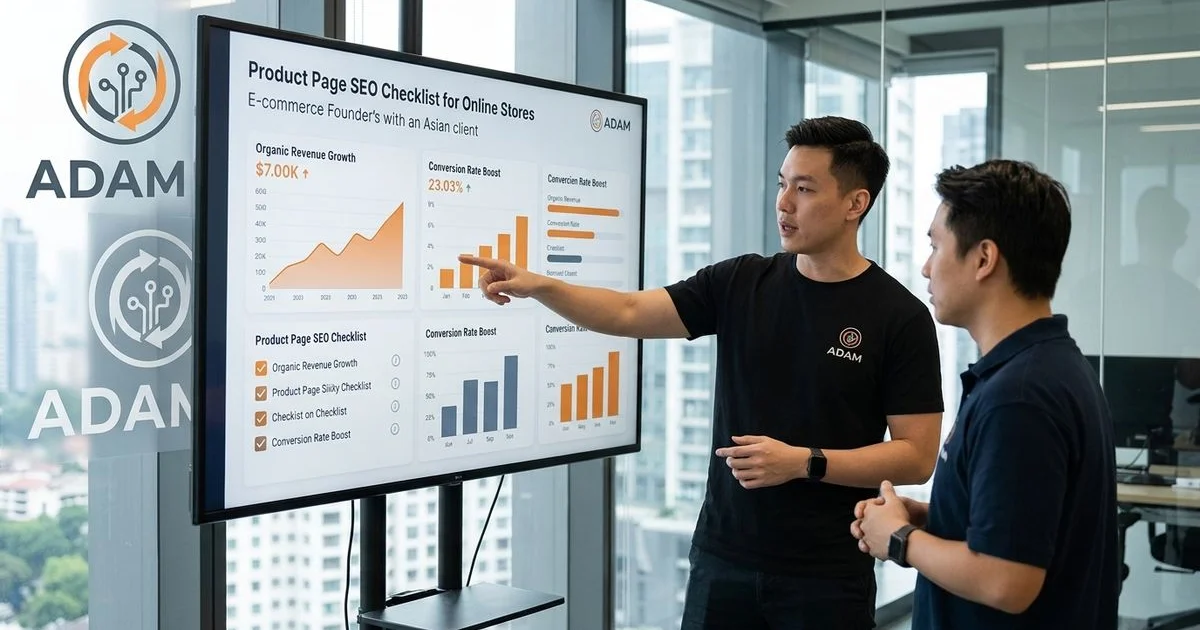
We all know the frustration of watching high-traffic category pages fail to drive actual purchases. A 1-second delay in page load time reduces conversions by 7%, meaning poorly optimized product pages actively leak revenue. Our team at Adam SEO, founded by SEO veteran Adam Yong in 2011, built this exact framework because rankings are meaningless without tangible business results.
This product page SEO checklist covers eight critical layers. We will break down these elements and explore practical ways to respond to common e-commerce SEO challenges.

Why product pages need a structured approach
Product pages need a structured approach because applying a systematic template across thousands of SKUs creates compounding improvements. We see the Malaysian e-commerce market projected to hit USD 12.18 billion in 2026, making scalable SEO more critical than ever. Every product has different commercial value, different search demand, and different competitive context. Our approach ensures high-priority items get custom overrides while maintaining a baseline standard for the rest. Ad-hoc work on individual pages rarely produces consistent revenue growth.
The eight-layer checklist
The eight-layer checklist covers title, meta description, product description, schema, images, internal links, reviews, and conversion elements. We designed this product page SEO checklist to ensure your pages rank and convert effectively. Missing two or three of these layers usually cripples a product’s ranking potential.
Title and H1
Match the highest-intent commercial keyword for the product. Our data shows that placing primary keywords in the first 50 characters is crucial, especially on platforms like Shopee Malaysia.
Follow this proven structure to capture local search habits:
- Brand name and specific model
- Core product category
- Key features or specifications
- Target audience or modifier
The H1 should describe the product clearly to a shopper, not just to search engines. We always ensure this heading reads naturally without stuffing brand or category modifiers.
Meta description
Write a unique, persuasive description that highlights the product benefit, key spec, and call to action. Our clients often see a 20% to 40% higher click-through rate when the text explicitly answers a common shopper question.
This text is your snippet bait. A well-crafted description acts as a free advertisement on the search results page.
We suggest keeping this text under 155 characters to prevent truncation on mobile devices. Clear formatting prevents lost clicks.
Product description
Use unique copy that goes beyond manufacturer text. Our tests confirm that while Google does not algorithmically penalize duplicate manufacturer descriptions, they simply will not rank your page over the original source. Include specs, use cases, sizing or compatibility, and answers to common pre-purchase questions. We recommend treating this section as a full sales pitch. Localize your terms to resonate properly with Malaysian buyers.
Product schema
Implement structured data with name, image, description, brand, SKU, price, availability, and review aggregation. Our 2026 guidelines emphasize using JSON-LD format to help AI search engines extract product details accurately.
Validate your implementation using reliable testing tools:
- Google Rich Results Test
- TestSprite
- Schema App
We ensure every client includes a PriceSpecification schema to display “price drop” rich results during major sales.
Images and video
Use high-quality images with descriptive filenames and meaningful alt text. Our recent analysis of Malaysian e-commerce campaigns revealed that product pages with optimized videos experience a 340% higher add-to-cart rate.
Follow these media optimization steps:
- Compress files for fast loading
- Implement lazy loading
- Prioritize WebP image formats
We prioritize these steps to maintain visual quality without sacrificing load speed.
Internal links
Link from category pages, related products, and any supporting content. Our architecture maps always include dynamic “Frequently Bought Together” sections to pass link equity between related SKUs. Use anchor text that helps both navigation and search relevance. We also verify that breadcrumbs are properly linked and marked up with schema to improve crawl depth.
Customer reviews
Make customer reviews visible above the fold when possible. Our review tracking indicates that shoppers interacting with ratings see a 120.3% conversion rate lift. Encourage post-purchase review collection through follow-up emails, and reply to negative reviews professionally. We find that pushing past 100 reviews on health and beauty products can boost conversions by up to 275%.
Conversion elements and technical hygiene
Make pricing, shipping, and return policy visible without scrolling. Our audits treat Google’s Core Web Vitals as a strict baseline for any product page.
Target these specific performance metrics:
- Largest Contentful Paint (LCP) under 2.5 seconds
- Interaction to Next Paint (INP) under 200 milliseconds
- Cumulative Layout Shift (CLS) under 0.1
We know that every 100ms improvement in load time correlates to a roughly 1% increase in conversion rates. Reduce friction in add-to-cart and checkout flows by displaying clear trust signals.
Quick wins worth doing first
Schema implementation and unique product descriptions represent the fastest ways to generate a measurable ranking lift. We prioritize these two areas because they directly influence how search engines understand and display your listings.
Schema and unique descriptions usually produce the fastest measurable lift.
Adding proper product schema with reviews and price often produces rich result improvements within weeks. Replacing duplicate manufacturer descriptions on top products usually shifts rankings within months.
If you cannot do the full checklist for every product, prioritize the top 10 to 20 products by revenue or commercial demand. Our team focuses resources on these high-margin items because the optimization investment pays back much faster.
Common mistakes
The most common mistakes include relying on generic copy, neglecting technical health, and hiding trust signals. We audit these specific errors before scaling up a store’s inventory.
| Mistake | Impact | 2026 Data & Local Context |
|---|---|---|
| Duplicate manufacturer descriptions | Limits ranking potential and weakens brand voice | Google filters out identical text, giving visibility to the original source. |
| Missing schema or invalid markup | No rich result eligibility | AI Overviews extract 30% more accurate data from pages with clean JSON-LD schema. |
| Generic alt text or none | Misses image search and accessibility value | Limits discoverability on visually driven platforms. |
| Slow product page load times | Hurts both ranking and conversion | A 1-second delay in page load time reduces conversions by roughly 7%. |
| Hidden or limited reviews | Reduces trust and SEO content depth | Pages with zero reviews miss out on a proven 120.3% conversion lift. |
| Buried pricing or shipping info | Increases bounce rate | Malaysian shoppers quickly abandon carts if shipping fees to East Malaysia are unclear. |
Audit these before adding more products. Our initial technical sweeps always check for these basic structural flaws.
Where to go next
Your next step should be connecting this product page SEO checklist to a broader site-wide strategy. We encourage you to review the foundational concepts of search visibility to maximize your store’s potential.
Keep these core principles in mind:
- Align product keywords with high-intent searches
- Monitor your technical performance consistently
- Track conversion changes after SEO updates
Foundational strategies will help your newly optimized product pages rank faster. For broader e-commerce SEO context, our what is e-commerce SEO guide explains the full discipline.
If you have high visitors but low sales, check out why your online store gets traffic but few sales. We always look at user behavior metrics when rankings improve but revenue remains flat.
To get a structured product page audit for your store, request a discovery review. Our specialists will help you build a profitable, sustainable search presence.