

What a real technical SEO audit covers
According to Semrush’s 2025 Website Health Benchmark Report, 72% of websites fail at least one critical technical factor. Our team sees this constantly, where Malaysian businesses blame their content for poor rankings when their foundation is actually broken.
The reality is that search engines cannot rank what they cannot easily crawl and understand. A single overlooked line of code can block your best product pages from appearing in Google. We founded Adam SEO in 2011 on the premise that search engine rankings are meaningless without tangible business impact.
This practical focus shapes every technical evaluation performed by our specialists. A basic, one-page report from an automated tool will never give you the complete picture. Our technical SEO service audits combine automated crawling, manual checks, and log file reviews to find the issues actively costing you sales.
A proper seo audit checklist goes far beyond simple automated scores.
Let’s walk through the six distinct layers of a real audit and how to prioritise the findings.
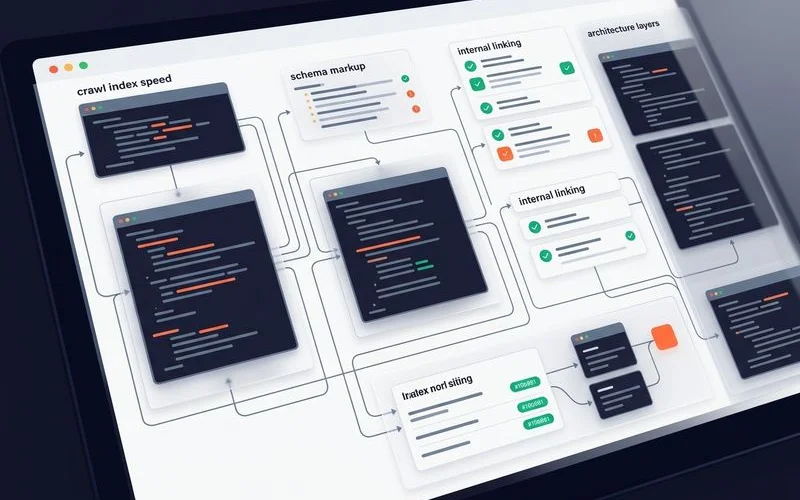
The six audit layers
A proper technical website audit requires looking at multiple connected systems. Every modern platform has unique quirks that affect search visibility. Our framework breaks the process down into specific, manageable categories.
Here is how each critical component functions. You need to understand these layers to fix the root cause of ranking drops.
Crawl and indexation
The first step involves ensuring search engines can discover your important pages while ignoring the unimportant ones. Your crawl budget is a finite resource that should never be wasted on low-value URLs. Our crawl audits review robots.txt configuration, XML sitemap completeness, noindex usage, and Search Console coverage data.
Google processes JavaScript rendering in two distinct phases today. This means client-side rendering can severely delay indexing if you rely heavily on React or Next.js. We always look for partial hydration or server-side rendering setups to guarantee Googlebot sees your core content immediately.
Key crawl checks include:
- Robots.txt directives.
- Canonical tags and duplicate content handling.
- JavaScript rendering efficiency.
- Crawl budget optimisation.
Performance and Core Web Vitals
Page speed directly impacts both your organic rankings and your conversion rates. A slow site creates friction, and a single-second delay can drop conversions significantly. Our performance reviews isolate bottlenecks using Google’s exact Core Web Vitals metrics.
Data from 2026 shows that only 48% of mobile pages currently pass all three of these essential thresholds. These numbers highlight a massive gap in basic website optimisation. We specifically audit mobile performance because it represents the biggest opportunity for most Malaysian sites.
| Metric | 2026 Passing Threshold | Common Culprit |
|---|---|---|
| LCP (Largest Contentful Paint) | Under 2.5 seconds | Large unoptimised hero images |
| INP (Interaction to Next Paint) | Under 200 milliseconds | Heavy main-thread JavaScript |
| CLS (Cumulative Layout Shift) | Under 0.1 | Ad banners or fonts loading late |
On-page and structured data
Search engines use on-page elements and schema markup to interpret the precise context of your content. Without these clear signals, algorithms struggle to match your pages with user intent. Our team reviews title tags, meta descriptions, H1 usage, and image alt text to confirm they are fully optimised.
Structured data validation is now a hard requirement for rich result eligibility. It is also a major factor for visibility in AI-driven search features like Google’s AI Overviews. We ensure local businesses use accurate LocalBusiness schema, and e-commerce stores include Offer schema for payment gateways like FPX or GrabPay.
Essential structured data elements:
- Product and AggregateRating.
- BreadcrumbList formatting.
- LocalBusiness and Organization details.
- FAQPage markup.
Site architecture
A logical website structure helps distribute authority from your highest-traffic pages directly to your commercial templates. Pages buried more than three clicks deep rarely receive enough priority from web crawlers. Our site architecture analysis evaluates URL formatting, internal linking, breadcrumbs, and depth from the homepage.
Strong architecture aligns your commercial goals with how search robots navigate. A flat, organized structure pushes link equity exactly where it is needed most. We map out your template patterns to ensure users and crawlers can find products logically.
Content quality signals
Search algorithms actively demote websites filled with thin, duplicative, or outdated content. This prevents search engines from splitting ranking power between two identical URLs. Our content audits identify keyword cannibalization, where multiple pages on your site compete for the exact same search term.
“Consolidating thin pages into one authoritative resource is often the fastest way to recover lost search traffic.”
Google applies strict standards to financial, medical, and e-commerce websites today. Trust signals are non-negotiable in these highly regulated spaces. We evaluate your pages for clear Experience, Expertise, Authoritativeness, and Trustworthiness (E-E-A-T) signals, like verifiable author credentials and clear bios.
Security and accessibility
A secure and accessible website protects user data while providing a better browsing experience for everyone. Accessibility compliance ensures all users can navigate your site easily. Our security checks verify proper HTTPS configuration, the presence of required security headers, and mobile usability.
These elements strongly influence both user conversion rates and mobile search rankings. Ignoring basic security protocols will actively harm your brand reputation. We treat security errors as immediate priority fixes before executing any larger marketing campaigns.
How findings should be prioritized
Fixing every single technical error on a website is rarely a profitable use of engineering time. A massive backlog of minor issues often paralyzes development teams. Our approach focuses on grouping issues by their direct impact on traffic and the effort required to resolve them.
The goal is to sequence the work so your engineers tackle the highest-impact items first. This strategic roadmap ensures your budget goes toward changes that actually move the needle. We assign every finding an estimated impact score alongside the required developer, content, or design hours.
Prioritize by SEO impact and implementation effort, not by what looks impressive in a report.
A long list of low-impact fixes is less valuable than a short list of high-impact recommendations with clear acceptance criteria.
For example, an agency might charge RM3,000 to RM8,000 for a mid-sized site audit in Malaysia right now. Fixing a slow INP score on your main checkout button will always take precedence over tweaking a meta description on an old blog post. We ensure that investment pays off by providing strict acceptance criteria for every technical fix, making success totally measurable.
When to commission an audit
Timing your technical review correctly can prevent catastrophic drops in organic traffic. You should investigate immediately if you experience a sudden ranking drop that carries technical fingerprints. Our team recommends running a full audit before any major site redesign, platform migration, or expansion into new regional markets.
A periodic health check every six to twelve months makes sense for rapidly growing sites. Getting the foundation right the first time saves significant stress and budget. We see a lot of Malaysian e-commerce stores fail here when their SKU counts explode or they add complex new payment integrations.
Common triggers for an immediate technical review include:
- Migrating from WooCommerce to Shopify.
- Launching a brand new website design.
- Noticing a sharp increase in paid acquisition costs.
- Expanding content across multiple languages or countries.
Fixing a botched migration later can cost anywhere from RM10,000 to RM25,000 in recovery efforts. A proactive approach is always cheaper than a frantic rescue operation. We always tell service businesses to check their technical health immediately following major content launches.
Where to go next
Resolving underlying structural issues is just the beginning of a successful search strategy. Stop letting technical debt hold back your digital growth. Our team has published several detailed resources to help you tackle specific challenges.
For targeted indexing problems, see why Google is not indexing your website. For detailed performance work, review our guide on Core Web Vitals and page speed for SEO. We maintain an updated breakdown of local pricing structures, which you can read in our guide on technical SEO audit cost in Malaysia.
Every technical fix you implement builds a stronger foundation for future traffic. To commission a structured audit for your site, request a discovery review.